
NikolaToy Balance Robot Pro Review: Worth Buying a Pre-Built Babot?
Self-balancing ball robots have been a fixture of hobbyist robotics for years — the classic “Babot” project by maker Johan Link showed a small platform that could keep a ball hovering in place using a Stewart platform and infrared sensing. NikolaToy has turned that concept into a ready-built product, the Balance Robot Pro, priced at $129.90. We looked at what’s actually inside the build, how it compares to the cheaper 1.0 version, and whether a pre-assembled version of a maker classic is worth buying instead of building one yourself.
What It Actually Does
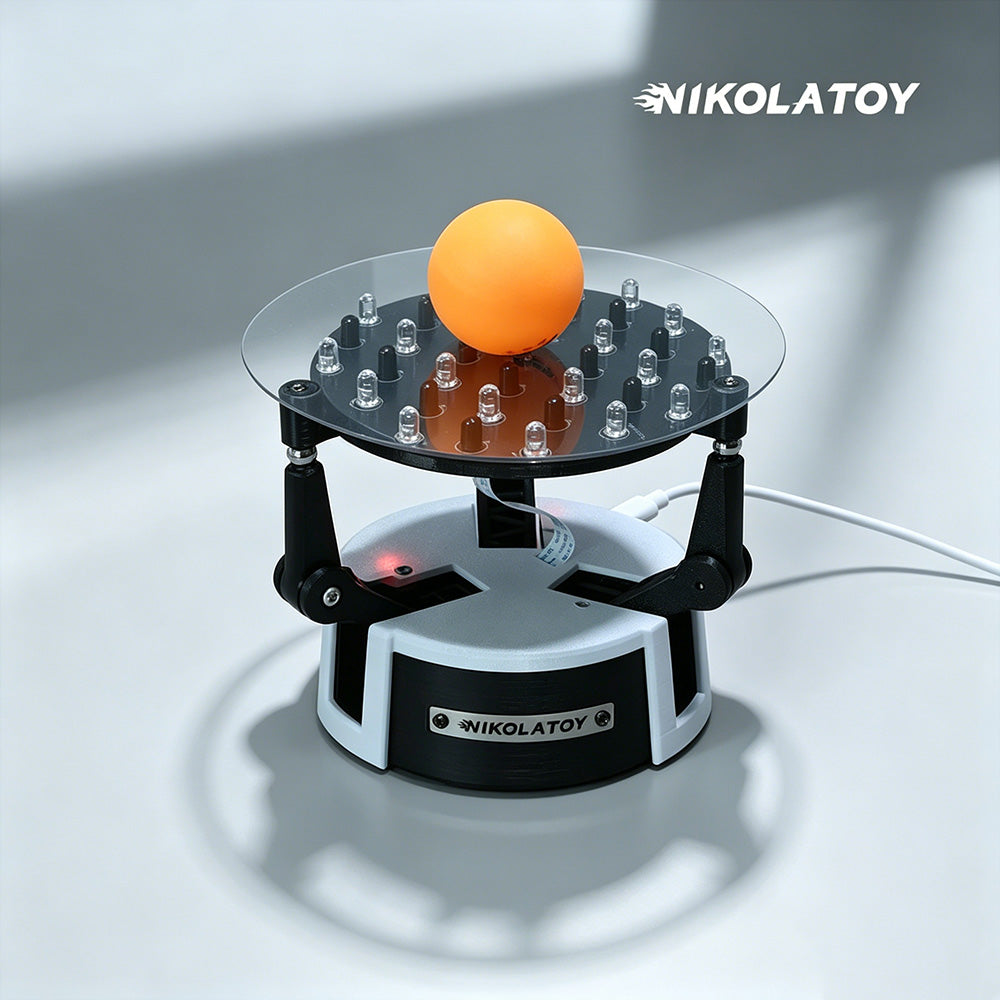
The Balance Robot Pro is a six-legged Stewart platform — a hexapod-style mechanical base — with a flat, sensor-lined top plate. Drop a ball on top, and the platform’s actuators continuously tilt to keep the ball centered, correcting in real time as you nudge or push it. It’s the same core mechanism found in DIY ball-balancing robot builds that have circulated in maker communities for years, except NikolaToy’s version arrives assembled rather than requiring you to source servos, wire a microcontroller, and tune a PID loop yourself.
Pro vs. 1.0: What the Upgrade Adds
NikolaToy sells two versions of this robot: the Balance Robot 1.0 at $109.90 and the Balance Robot Pro at $129.90. According to the product listing, the Pro version specifically improves three things: stronger resistance to interference from ambient light (since the platform tracks the ball using an infrared matrix, which can get thrown off by other light sources), real-time human-computer interaction, and better data feedback for more playability. If you’re planning to use it somewhere with bright overhead lighting or sunlight, the $20 upgrade to the Pro version is probably worth it just for the interference resistance alone.
Build Quality and What’s Included
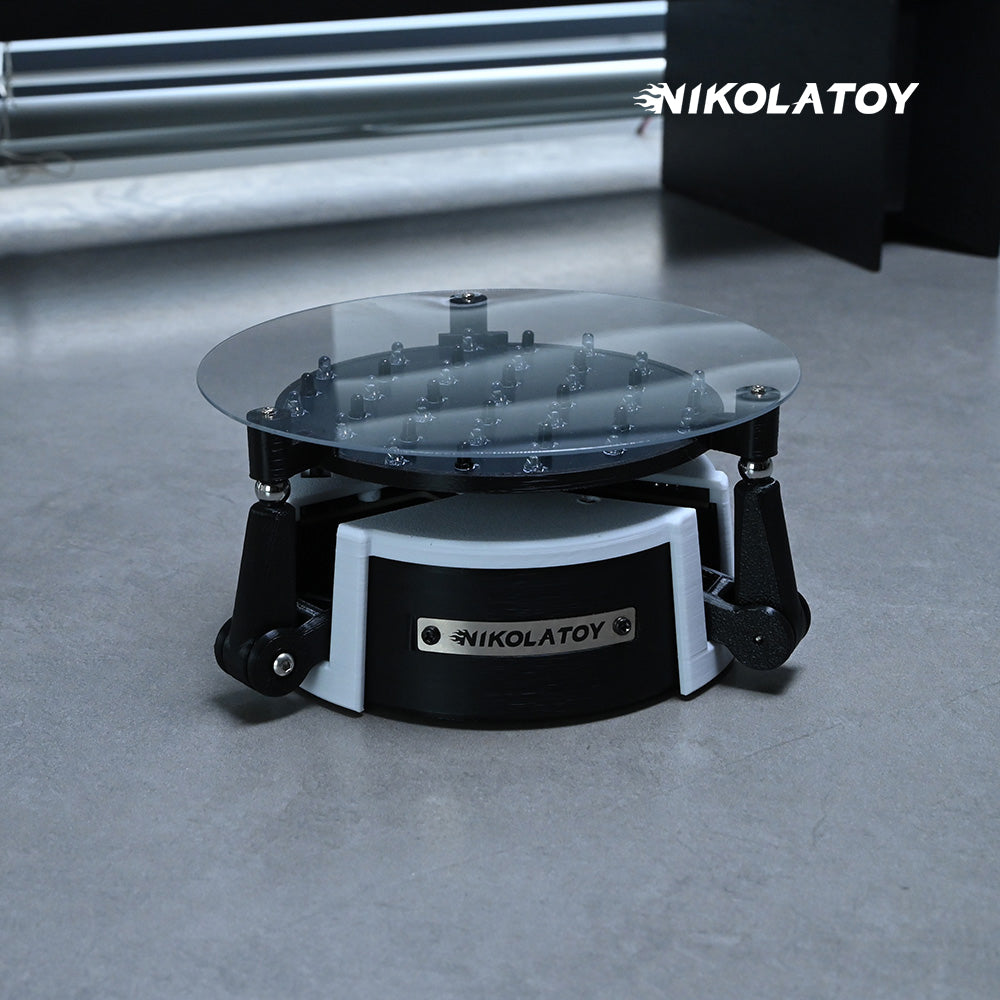
The unit itself uses a clear acrylic top plate over a ring of infrared emitters/sensors, mounted on three (visually six-armed) actuator legs connected to a black-and-white base housing the electronics. It ships assembled and ready to demonstrate out of the box — NikolaToy states orders ship out within 24 hours and come with a 1-year warranty and what they describe as an official genuine product guarantee, which matters in a category where cheap knockoffs of open-source robotics projects are common.
Who This Is Actually For
This isn’t a children’s toy despite being sold as one — it’s better suited to makers, engineering students, robotics hobbyists, or anyone who wants a genuinely impressive desk piece that demonstrates real control theory in action. If you already know how to build a Stewart platform from scratch and enjoy the process, you’ll get more satisfaction (and save money) doing it yourself. But if you want the finished result — a working, tunable ball-balancing robot — without sourcing parts, writing control code, and debugging sensor noise, paying $129.90 for a pre-built, warrantied version is a reasonable shortcut.
FAQ
What’s the difference between the Pro and 1.0 versions?
The Pro adds stronger resistance to ambient light interference (since the ball-tracking uses infrared), real-time human-computer interaction, and improved data feedback. The 1.0 version is $20 cheaper and skips these upgrades.
Does it come fully assembled?
Yes. Based on the product photos and description on NikolaToy’s listing, the Balance Robot ships built and ready to demonstrate, not as a kit you need to solder or program from scratch.
Is this good for kids?
It’s marketed as a toy, but it’s really a robotics demonstration piece — best suited to teens and adults interested in engineering, or as a supervised STEM demo rather than an unsupervised kids’ toy.
What’s the warranty and shipping like?
NikolaToy states a 1-year warranty and ships worldwide with orders going out within 24 hours, according to their product page.
Bottom Line
The Balance Robot Pro is a niche pick, but it’s a well-executed one — a pre-built version of a genuinely respected DIY robotics project, with a real spec-based upgrade path between the 1.0 and Pro versions rather than just a price gimmick. At $129.90, it’s priced like the specialty engineering demo it is, not an impulse buy, but for makers, students, or robotics enthusiasts who want the finished build without the debugging, it’s a solid way to get one. You can check current pricing and both variants on NikolaToy’s site.